


News

- Details
Despite repeatedly critics from UN and EU, Finland has no intention to ratify ILO-Convention No. 169. Convention No.169 is a legally binding international instrument open to ratification, which deals specifically with the rights of indigenous and tribal peoples.

- Details
For decades there was a boundary dispute between Norway and Russia, where Norway favored the Median Line and Russia favored a meridian based sector.

- Details
Here is extensive data about Arctic Shipping. Below is a list of documents of high importance and easy access to the Arctic Portal Data Library gives an even broader dimension to search for shipping data.

- Details
As reported by the Arctic Portal, real time catches in the Canadian, Alaskan and Russian Arctic waters are considerably higher than reported to the United Nations Food and Agriculture Organization (FAO).

- Details
Governance of Arctic shipping occurs through a mix of domestic and international legal instruments and “soft law” regional agreements. There is no comprehensive international legal regime for the Arctic and no multilateral political organisation with the power to regulate activities or make legally binding decisions.

- Details
The Arctic contains some of the last physically undisturbed areas on the planet, something that is becoming very rare in modern times. In recent decades, and especially during this millennium, the Arctic has also been undergoing extraordinary environmental changes. The Arctic is known as a storehouse of massive supplies of natural resources, which is increasing pressure on their extraction due to high commodity prices and a growing worldwide demand for them.

- Details
According to University of British Columbia researchers, it is estimated that fisheries catches in the Arctic totaled 950,000 tons from 1950 to 2006, almost 75 times the amount reported to the United Nations Food and Agriculture Organization (FAO) during this period.

- Details
The AMSA report (2009) is the leading source of information about Arctic shipping today. The Arctic Council decided in November 2004 at the ministerial meeting in Reykjavík that a comprehensive Arctic marine shipping assessment was necessary.

- Details
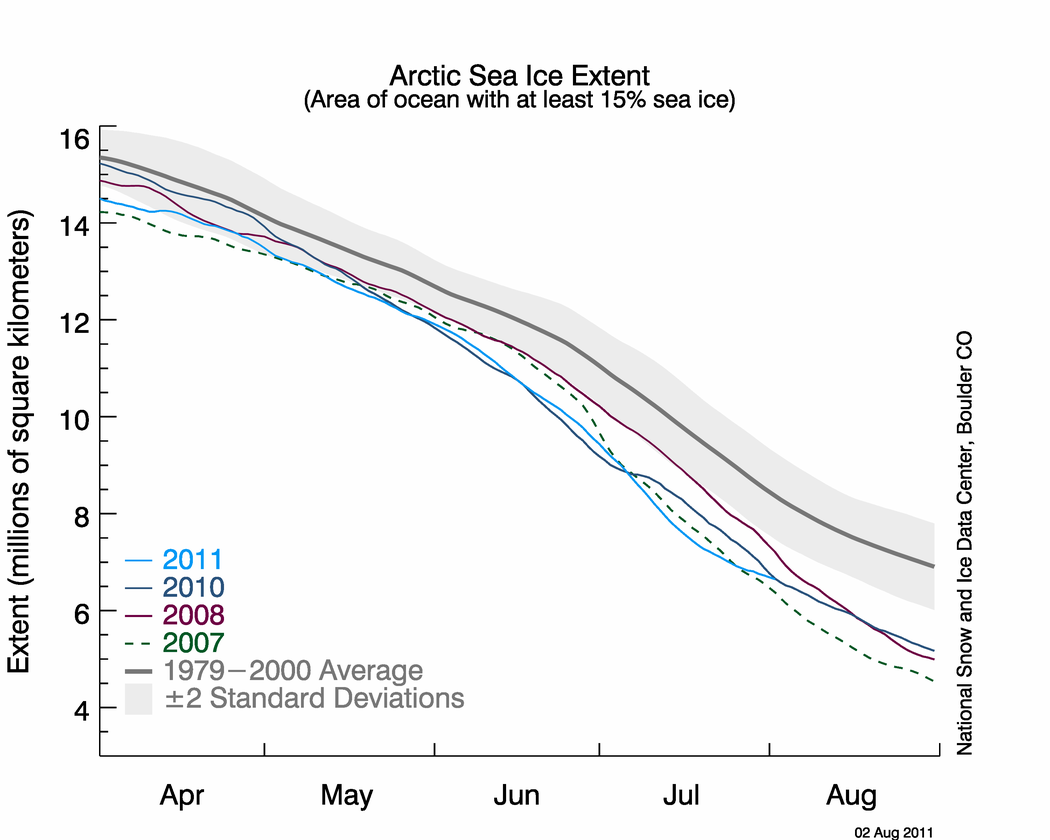
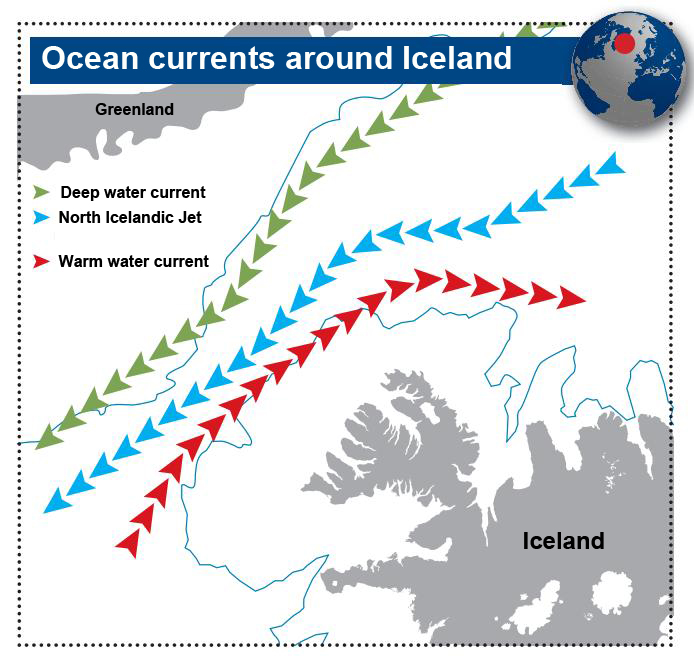
A North Atlantic current flowing into the Arctic Ocean is warmer than for at least 2,000 years in a sign that global warming is likely to bring ice-free seas around the North Pole in summers, a study showed.

- Details
A shipping route through the central Arctic Ocean depends on significant reduction of ice thickness in that area.

- Details
The Northeast Passage is in reality a useful sea route. It runs from the northernmost parts of the North Sea across the icy waters of the Arctic Ocean north of Russia, east to the Chukchi Sea and Bering Straits where access to the North Pacific is reached.

- Details
The Northwest Passage is first and foremost considered to be continuous passage between islands and the continental mainland of Canada rather than an actual shipping route.

- Details
Two sea routes have been defined to cross the Arctic, enabling ships to move between the Atlantic ocean and the Pacific ocean and thus have the possible status as international strait (or waters) giving right to transit passage.

- Details
The Arctic is comprised of a large ocean area and land areas of eight states: Canada, Denmark (Greenland), Norway (Svalbard), Russia, USA (Alaska), Finland, Sweden and Iceland. The Arctic’s most pronounced feature, at least until very recently, has been the large ice-covered ocean. However, significant changes are taking place in the Arctic area, both on land and especially on the maritime areas.

- Details
The Thirteenth meeting of the Conservation of Arctic Flora and Fauna Working Group (CAFF XIII), is to be held in Akureyri, Iceland on February 1 - 3rd 2011. Every two years, the Arctic Council Working Group on Conservation of Arctic Flora and Fauna schedules a large meeting in advance of the AC Ministerial meeting.
Arctic Portal.org - 2025 © All rights reserved.
When quoting, reusing or copying any material on the arcticportal.org or any of its sub-sites including but not limiting to: information, news, articles, data, maps or images, in part or in full, a citation stating the origin and a hyperlink to www.arcticportal.org is required.
