
News
Nordic Day Celebrated Across the Region
March 23 marks Nordic Day, an annual celebration of cooperation between the Nordic countries and territories. While the date itself is symbolic, the occasion is celebrated over a longer period with events taking place across the region.
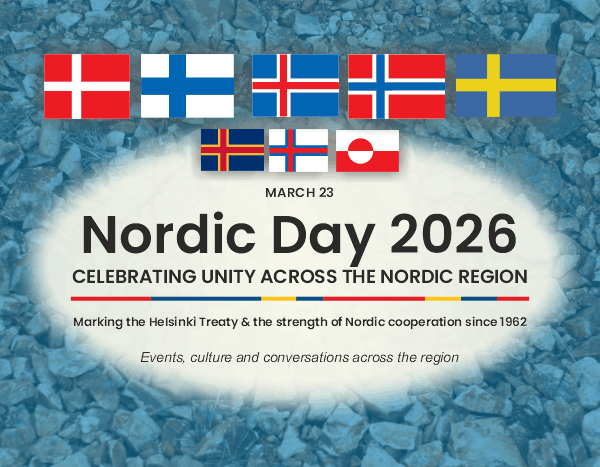 Nordic Day commemorates the signing of the Helsinki Treaty in 1962, which laid the foundation for close cooperation across areas such as culture, society, and the environment. The Nordic partnership brings together Denmark, Finland, Iceland, Norway, Sweden, as well as the Faroe Islands, Greenland, and Åland.
Across the Nordic and Baltic regions, the day is marked with a wide range of activities held over several days (see agenda here). These include seminars, panel discussions, and public events focusing on topics such as democracy, resilience, and the role of young people in shaping the future. The Nordic Council of Ministers organises and supports many of these events throughout the Nordic and Baltic regions.
In Sweden, for example, Nordic Day is celebrated on 24th March with an event at Kulturhuset in Stockholm, featuring expert talks and discussions with young participants on the future of democracy. In Iceland, the day is marked by a morning seminar on the 24th March at the Nordic House in Reykjavík, bringing together speakers to discuss societal challenges and cooperation.
Other activities include digital Nordic language cafés, where participants can meet online to practise languages from across the region, as well as cultural events and discussions held throughout the week in different countries.
Nordic Day and its surrounding events highlight shared values such as openness, trust, and collaboration, and serve as a reminder of the importance of continued cooperation in a changing world.
What are the Nordic countries?
The Nordic countries are a group of Northern European nations that share historical, cultural, and political ties. They include Denmark, Finland, Iceland, Norway, and Sweden, along with the autonomous territories of the Faroe Islands, Greenland, and Åland.
The Faroe Islandsand Greenlandare self-governing territories within the Kingdom of Denmark, while Åland is an autonomous region of Finland.
The Nordic region is known for strong cooperation across governance, sustainability, social welfare, and culture. Through formal agreements like the Helsinki Treaty, the Nordic countries work closely together to address common challenges and promote shared values both within the region and internationally.
Source: Norrænt samstarf
More information:
The tags below provide an opportunity to view previously posted related news within the selected category