
Highlights
Christmas traditions across the Arctic: Blending of old traditions and Christian influences
Across the Arctic, winter celebrations blend pre-Christian, Christian, and modern traditions in ways unique to each culture.
Nisse, Lucia and the Yule goat
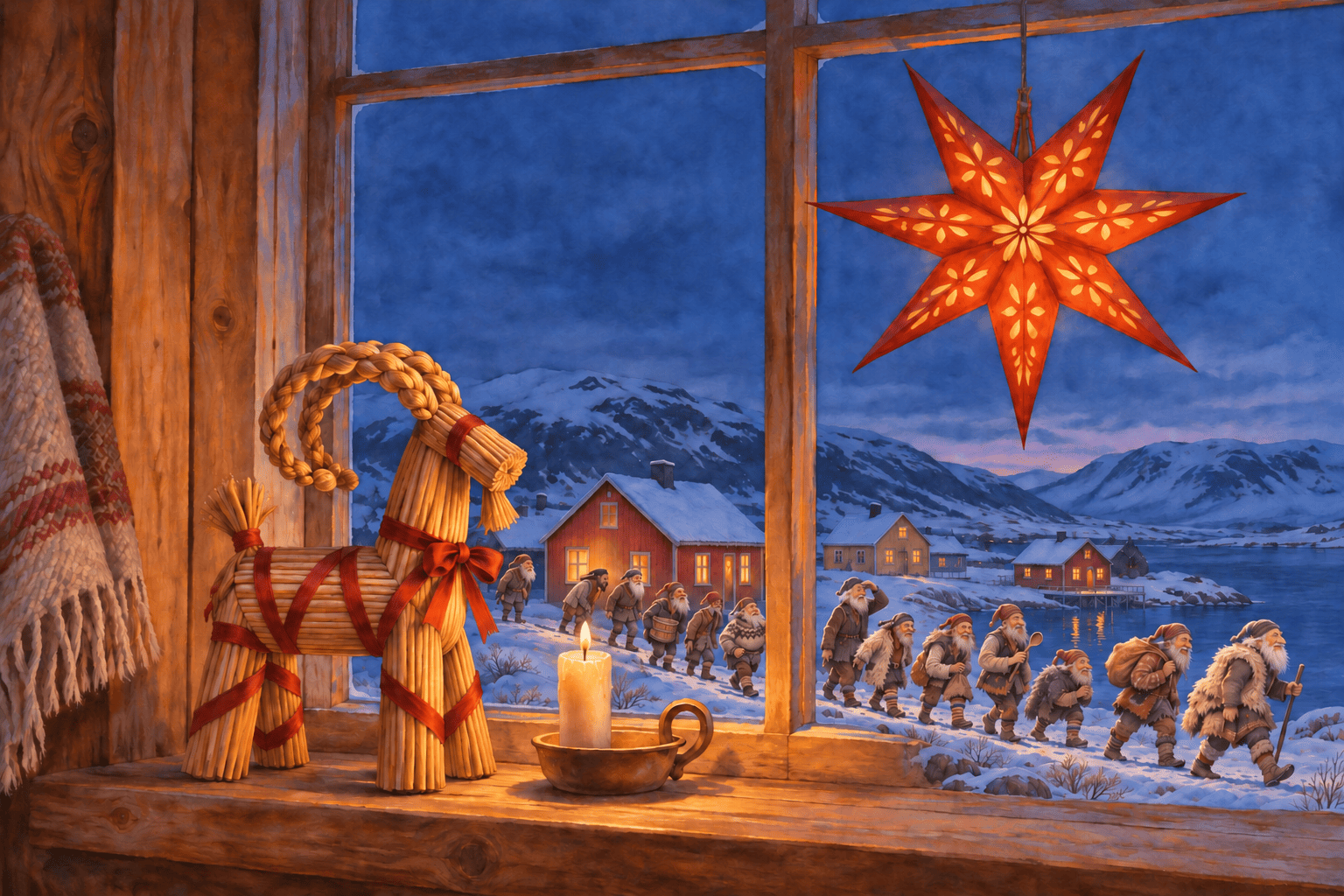
In the Scandinavian countries and in Finland, the Christmas season would not be complete without the strange household spirit that can be both helpful and mischevious. In Norway and Denmark they are known as the Nisse, in Sweden as Tomte, and in Finland as Tonttu. The Nisse is usually depicted as an small old man with a beard and a conical red hat. Their origins go back to pre-Christian traditions of protective household spirits and ancestral guardians. Each farm had its own Nisse, who was personally interested in seeing it prosper. If a family respected it well, leaving porridge with butter out for it on Christmas Eve, it was helpful and kind. If left neglected, it turned into a vengetful prankster. By the 19th century, the tradition merged with modern traditions around gift giving, and the Nisse blended into more of a Santa Claus figure. Today, Nisse are seen as a beloved part of Scandinavian Christmas culture.
Another famous tradition that has spread specifically from the Swedish-speaking part of Scandinavia is the Luciadagen, which happens on St. Lucia’s day, 13th of December. A young woman dressed as Lucia, in white with a crown of candles on her head walks in a procession that sings Christmas carols and gives out Christmas cookies. St. Lucia is the patron saint of light, and this celebration is supposed to bring light to the northern regions. Though it is a tradition based around a Christian saint, Luciadagen likely has folk belief origins.
Finally, a tradition that grown its own tradition in modern times is the Yule goat. The symbol was likely a reference to Norse belief to honor Thor, the god of thunder, who rode the sky in a chariot drawn by two goats. Modern depictions are made of straw and often used as Christmas decorations. Since 1966, The city of Gävle in Sweden builds a massive straw goat every year on its central square, where it stands for the duration of the Advent. This goat has been the subject of repeated arson attacks, to the point that it is part of Christmas folklore, and nowadays has a fence around it and a 24-hour security presence.
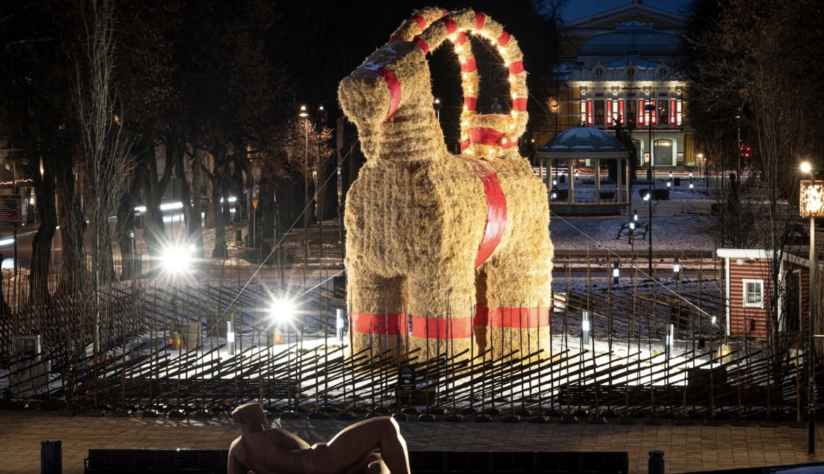
Image source: Gävlebocken stream
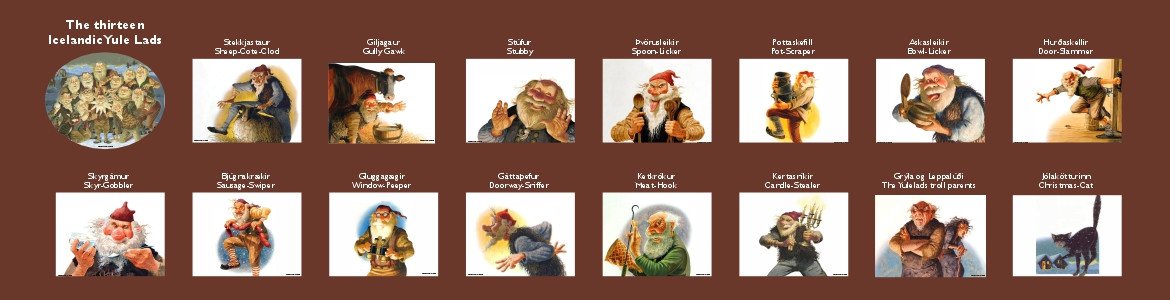
Unlike most other countries that only have one Santa Claus, Iceland has thirteen. They are called Jólasveinar Yule lads and take turns visiting children the 13 nights leading up to Christmas Eve, starting on December 12th. Children place one of their shoes on the windowsill of their rooms on each of those nights. For those children that behave well during that day the Yule lads will leave candy or a small treat but for those who behave badly can expect a rotten potato.
The Yule lads are a part of an Icelandic Christmas folklore that depict mountain-dwelling characters and trolls who come to town during the Christmas period. The parents of the Yule lads are trolls called Grýla and Leppalúði. Grýla is a scary troll woman who can detect when children misbehave, hunts them down, and takes them back to her cave to make stew of them. Leppalúði is known as the lazy husband who does not do much other than enjoy Grýla’s food. This couple own a big black cat known as the Christmas cat (Jólakötturinn). In the older tales, the Christmas cat is vicious and likes to hunt children who do not receive anything new to wear for Christmas and eats them.
You can read more about each of the Yule lads here.
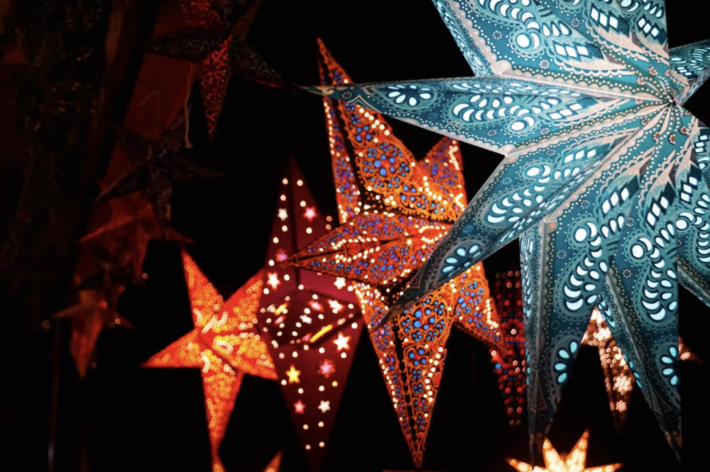
Image source: Pexels/ Marta Branco
One of the most popular Christmas traditions in Greenland is the lighting of the Christmas Star on the first Sunday in Advent. There is one in the household, typically made of paper, and remains lit until the 6th of January. The star custom was brought to Greenland by the Christian brotherhood Herrnhutters who came to Greenland in 1733 and were active until about 1900.
In Inuit communities across Alaska, Canada, and Greenland, winter celebrations focus on community, storytelling, and the importance of sharing. For example, in some Inuit traditions, a winter festival called “Quviasukvik” or “The Time of Joy” takes place around the same time as Christmas, symbolizing the beginning of the new year. It ends on the day of the first natural sunrise, which in some far northern regions can take a while. This celebration brings people together for feasting, dancing, and exchanging gifts, honoring the strength of family and community bonds during the harsh winter months. Storytelling and games play a large role, passing down ancestral knowledge and emphasizing the values of resilience, gratitude, and togetherness. Instead of focusing on one figure like Santa Claus, Inuit traditions emphasize sharing and unity with nature and the community.
In Labrador Inuit culture, an important time is the Najuluk Night. Similar to figures like Krampus in Alpine folklore, Nalujuk Night brings masked figures known as Nalujuit into communities. They visit children’s homes, intending to scare them, but also to remind them of the importance of good behavior and respect for community values. Despite their intimidating appearance, the Nalujuit embody a protective spirit, teaching children about discipline and courage.
Nature, Spirits and Community for the Sámi
Before the introduction of Christianity, the Sámi practiced animism, believing that spirits inhabited the natural world. Winter, marked by the Arctic's long nights and harsh conditions, was a time for rituals to honor these spirits and seek their protection. Central to this spiritual life were the Sieidi—sacred natural formations like rocks, cliffs, or unusual landscapes. Offerings of reindeer meat, fish, or other gifts were left at Sieidi sites to maintain harmony with nature and ensure survival through the season.
The dark season (Skađđi) brought with it not only physical challenges but also mythical fears. Among the Sámi’s most haunting legends is the tale of Stállu, a terrifying, child-eating creature who roams the Arctic darkness with his eerie mouse convoy. According to Sámi lore, untidy households risked trapping Stállu and his convoy outside, angering him and prompting him to enter the home. To appease him, families would leave water outside in case he grew thirsty during his travels. Such stories served both as warnings and a way to make sense of the harsh, unpredictable Arctic winters.
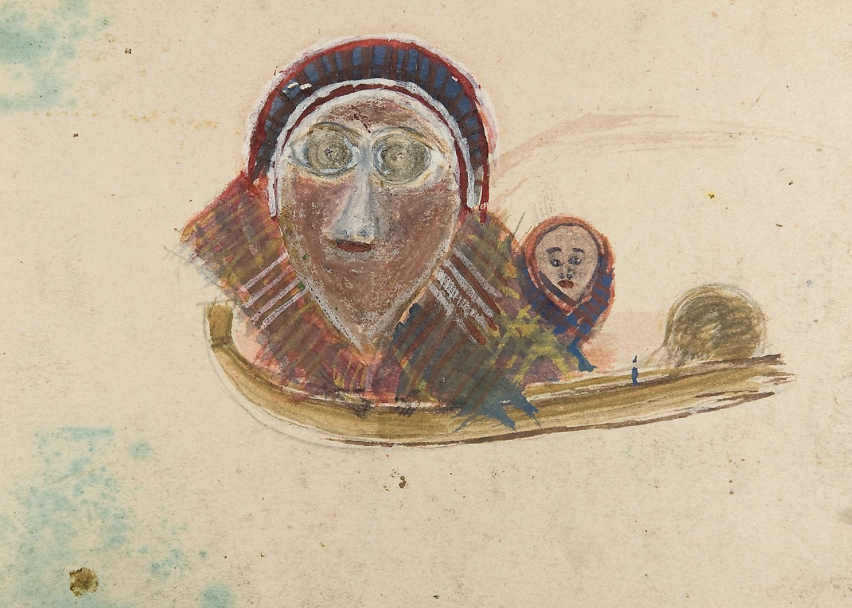
Image source: Nordiska museet
Modern Sámi Christmas celebrations reflect the interplay of Christian faith and Indigenous tradition. Family gatherings, gift-giving, and festive meals often feature traditional foods like reindeer meat, fish, and homemade bread, emphasizing the Sámi’s reliance on nature and stewardship of their environment.
Revival of Heritage among Russia’s Indigenous people of the Arctic
Similarly to the Sámi and other Indigenous people, with the introduction of Russian Orthodox Christianity, many Indigenous communities in the Russian Arctic have integrated Christmas into their practices. Orthodox Christmas, celebrated on January 7, often includes festive meals featuring reindeer and fish. Additionally, the secular New Year is widely celebrated, often with Ded Moroz (Father Frost) and Snegurochka (Snow Maiden) bringing gifts, adding a blend of local and Russian traditions.
However, many Indigenous people in Siberia have kept and revived their pre-Christian tradition. Among the Nenets, Evenki, and Khanty, shamanic ceremonies are central to the period around the Winter Solstice and the New Year. Shamans led rituals involving drumming, chanting, and offerings to nature spirits and ancestors. Fire plays a significant role in these ceremonies, symbolizing purification and a connection to higher powers. Community members often offer food, reindeer antlers, or fish to the fire, seeking blessings for the harsh months ahead.
Sources: Greenland travel, Guide to Iceland, Canada on Demand
The tags below provide an opportunity to view previously posted related news within the selected category